
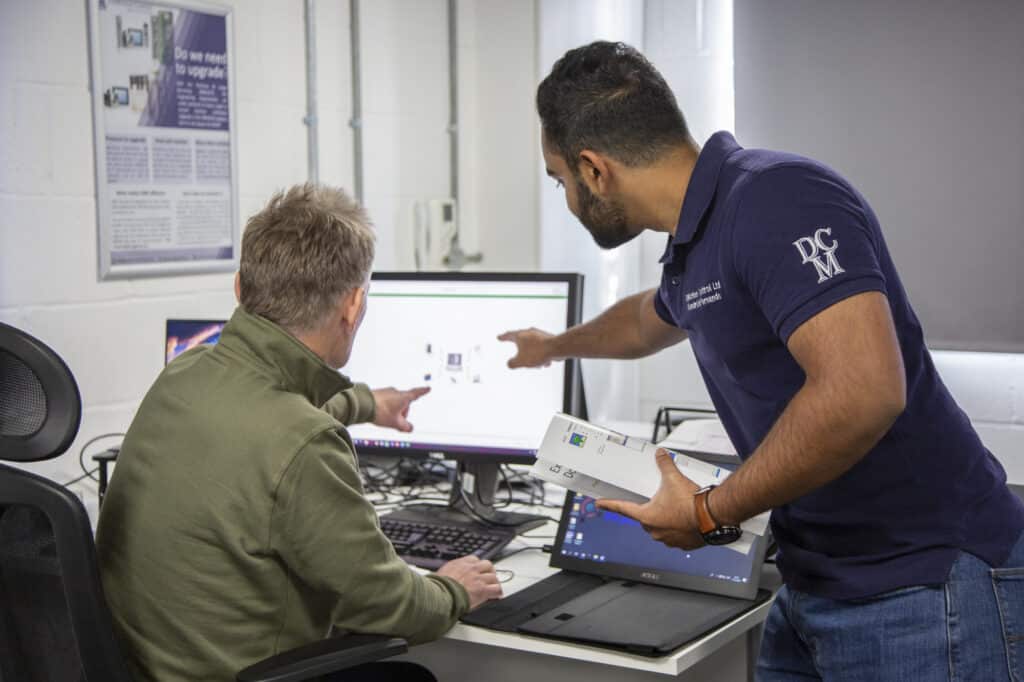
The machine has stopped. Production needs it to restart. The display shows a PacDrive error and you are the engineer standing beside it. You may be confident with electrical systems, motors and general fault-finding, but if ELAU PacDrive is unfamiliar, knowing where to begin can still be a little daunting.
What does the error message mean? How do you communicate with the controller? Can the spare in stores be used on this machine? Which software – if any – do you need? Platform-specific training helps turn those questions into a structured approach.
When choosing a PacDrive Training course it is always helpful to ask:
What should I be better equipped to do when I return to site?
Firstly, understanding how the platform fits together. Before diagnosing individual components an engineer needs to understand the system they belong to. On a PacDrive machine, the controller, drives, motors, feedback and communications all work together, so an error reported by one component may reflect a condition originating elsewhere.
Understanding this relationship will help locate the affected part of the system and avoid focusing on the component displaying the error. It will also help to better describe the problem clearly when requesting support as “the machine won’t run” provides a specialist little to work with. The controller type, affected motor, diagnostic message and circumstances of the stop provide a more appropriate starting point. Training should develop this understanding alongside the practical skills needed to access the system.
Read and understand the evidence before changing any components
A displayed error is only the starting point for any investigation. Engineers need to know how to communicate with the equipment, access diagnostic information as well as interpret what they find. Our PacDrive M Module 1 includes communication and diagnostic topics designed to help engineers become more familiar with messages and the information available during a fault.
This methodology matters, so:
Understand the error, understand the machine function and then work through the possible causes systematically
An I²t issue on a continuously running conveyor may prompt different questions from a similar issue on a mechanism repeatedly accelerating and stopping. The diagnostic condition matters, but so does what the motor is being asked to do. Any course should help engineers recognise this.
Tasks should also be practised before a breakdown occurs. Many can be straightforward to resolve if undertaken methodically and with the correct equipment and instructions. However, these same tasks can become much harder when production has stopped and people are waiting. Practical training gives engineers an opportunity to become familiar with the process before working under this pressure.
Relevant PacDrive M and PacDrive 3 topics include how to take backups and the importance of doing so regularly. Component substitution and firmware changes, alongside communication, motors and diagnostics are also covered.
For example, consider a MC-4 spare. Having a drive in stores is valuable, but the engineer also needs to understand its suitability for the machine and any firmware requirements associated with fitting it. Practising the relevant procedure will help expose gaps in knowledge early. So a missing cable, unfamiliar software, an unclear instruction or a spare nobody can locate – all are easier to address if planned for rather than during an emergency.
Training should improve judgement as well as confidence, as it’s equally important to recognise when to stop and escalate a problem. Engineers need to understand safe working practises, site authorisation as well as the limits of any training. They should be able to recognise when evidence is incomplete, if a proposed change introduces risk and when specialist support is needed. Knowing what information to capture before escalating is part of that capability as it prevents repeating the initial investigation.
PacDrive M and PacDrive 3 require appropriate platform knowledge, so it’s important to choose the appropriate course(s) for equipment installed onsite and to establish what platform(s) the site operates and what is expected in terms of support. Controller and drive references are more useful than simply saying the machine uses ELAU.
Who is attending has to be considered as a junior engineer who needs to connect, read diagnostics and support basic recovery, will have different requirements from someone responsible for programming or more advanced investigations.The appropriate PacDrive M and PacDrive 3 modules should be based on the installed platform, engineers’ experience and the tasks their roles require.
Obviously, the benefits of any training will become apparent on what happens afterwards.
Engineers will likely still need opportunities to apply newly accquired knowledge and initially with supervision where appropriate. Managers may also need to consider coverage across shifts. For example, if only one person is able to communicate with the PacDrive system the site will be dependent on their availability. Ensuring others are familiar with any such processes and documenting these will limit exposure.
PacDrive training should give engineers a clearer understanding of the equipment, a more systematic diagnostic methodology and familiarity with relevant recovery tasks. This will mean they are better prepared during a breakdown as well as able to recognise when to call on specialist support.