
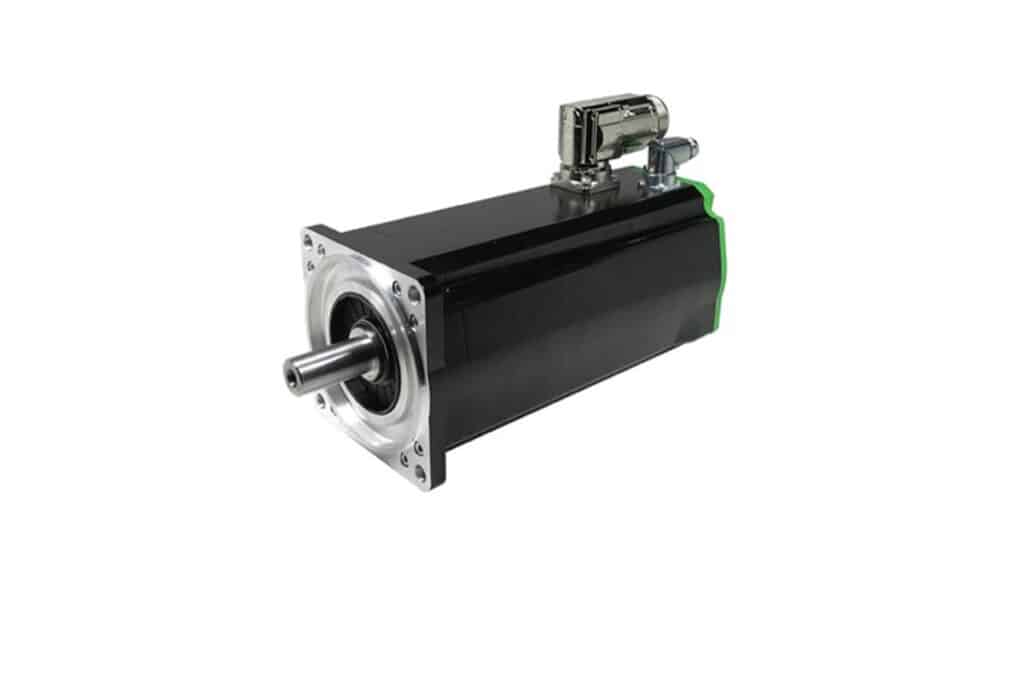
If your ELAU PacDrive M line still runs the original SM series motors, the question is no longer whether to upgrade to SH motors. It’s how long you can afford to wait.
PacDrive M obsolescence is a potential risk for many companies if they have no mitigation plans. Like-for-like replacements and compatible spares for SM motors are becoming harder to source. Lead times on refurbished units are increasing too. When an SM motor fails mid-shift on a packaging or pharma line, the costs can escalate very quickly. Our own plant survey puts unplanned ELAU PacDrive downtime as high as £40,000 per hour in some cases after lost throughput, scrapped product and idle labour has been taken into account.
The SH series can eliminate this risk. However, a swap is not a straight replacement. Assuming SM and SH motors are simply interchangeable risks discovering they are not midway through commissioning: the worst possible time to find out.
The SH motor family uses single-tooth winding technology which concentrates flux more efficiently across each pole. In practice, this means better thermal distribution, a lower production footprint for equivalent torque output and a more compact physical profile than the SM units they replace.
What the SH series actually does differently
Across five flange sizes, the SH series covers most axis configurations you’d find on a PacDrive M system. This range is intentional. It means you can migrate multiple axis types within the same line without mixing motor families or increasing spares inventory.
The SM series used electronic nameplates and a high-resolution encoder running at one million steps per revolution. The SH series uses a different encoder architecture. Both deliver high precision, but they are not electronically equivalent and the drive configuration needs to reflect this.
The real cost of not upgrading
When an SM motor reaches end of life on a running line you face a difficult choice: trying to source a replacement from a shrinking pool of refurbished stock or stop the line. Neither option is ideal and even less so part way through a shift.
The deeper problem is that SM motor degradation is rarely sudden. For example, bearing wear accumulates over time and may go unnoticed. Considering the cost of prolonged unplanned downtime the economics of proactive migration are compelling. This is even before you factor in the cost and risks of sourcing an emergency replacement.
Waiting for failure also narrows the window for upgrading. A planned migration can be implemented during planned maintenance. An unplanned one cannot.
What makes an SM to SH upgrade succeed
The engineering considerations are not complex, but they do need to be addressed in the correct order. Bypassing any of them risks extending commissioning time or introducing performance problems after restarting.
Parameter mapping
SM motor parameters, particularly those stored in the electronic nameplate, do not transfer directly to a SH configuration. The data stored on the SM EEPROM will have equivalent data on the SH EEPROM as long as you pick the right one based on type plates.
Encoder compatibility
Because SM and SH motors use different encoder types, the drive’s feedback channel settings need to be reconfigured to match the SH encoder protocol. This is a distinct task from parameter mapping and is easy to miss if the commissioning checklist was built around SM assumptions. Additionally, MC-4 drives need to be set to a high enough firmware to recognise the new SH hardware. This allows for compatibility and effective communication and control between the devices.
Drive tuning
Velocity loop and current loop gains which were optimised for SM installations will likely need adjustment for the SH motor’s different inertia and winding characteristics. The degree of adaptation depends on the specific axis, the load profile and how aggressively the original SM tuning was set. Time needs to be allocated for this: it is normal, not a sign there is an issue.
Commissioning verification under load
No migration should be signed off without checking performance under load. SH motor behaviour under the actual dynamic load of the axis is determines whether the tuning holds across the full production cycle.
What to consider before you plan the upgrade window
Before proceeding there are a few upstream checks to perform which will reduce the risk of any surprises on the day the work is planned.
Firstly, firmware versions matter as older PacDrive controller firmware may not fully support some SH devices.
Cable compatibility also needs verification. SM and SH motors use different connector pinouts in some configurations. The existing cable assemblies need to be checked against the SH motor specifications for the axis in question.
Lastly, parameter backups should be taken from every SM axis before work begins, not just the motors being replaced. A full controller backup protects you if commissioning requires resetting/reconfiguring.
If you are migrating more than one axis, axis sequencing needs planning. Changing multiple axes at the same time increases the variables in play during tuning. A phased approach, one or two axes per maintenance window, provides a better comparison baseline and a fallback if any axis needs additional attention.
Machine Analyser® can be very useful here. Running it before the migration to capture drive loading and following error trends on the SM axes provides a documented baseline to compare to after the SH motors are live. This will speed up resolution of any post-commissioning performance issues.
The case for doing this now
SM motor availability will not improve. The SH series is current, supported and designed to extend the service life of PacDrive systems that would otherwise be at growing risk from component scarcity. It is also the motor series used for PacDrive 3, so when a full migration is decided upon the motors will not need replacing.
The engineering work involved is well-defined. The considerations above are not unknowns. They are predictable steps which experienced PacDrive engineers handle routinely when the migration is planned rather than forced. What makes the difference between a smooth upgrade and an extended commissioning headache is planning those steps before the motor fails, not after.