
Obsolete doesn’t mean unavailable — yet
You can still buy a PacDrive M MC-4 drive today. That’s a potential trap because availability now is not a reliable guide for availability in eighteen months’ time.
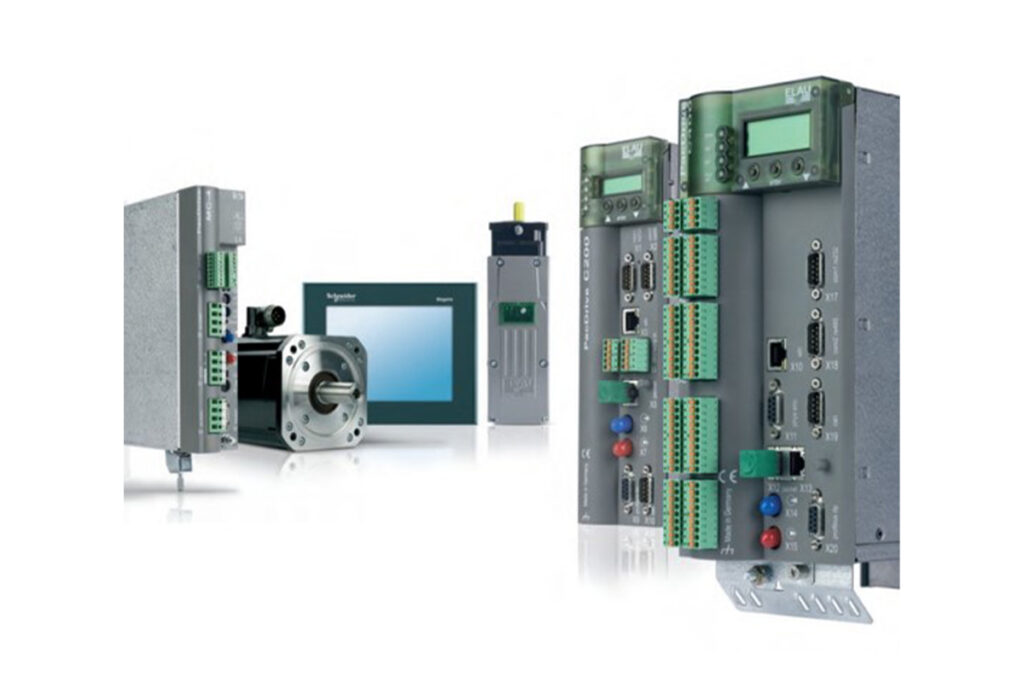
PacDrive M production finished in December 2018 and, at the end of December 2024, Schneider Electric ended its official service and repair window. However, C400, C600 controllers, MC-4 drives, SM and SH motors still circulate through distributors and secondary channels. But now there is a limited source for every item as replacements are no longer being manufactured.
This represents the real risk for procurement: stock won’t just vanish overnight. Instead, availability will gradually reduce until one day there simply isn’t any.
What PDM obsolescence actually means for procurement
PacDrive M obsolescence changes several things at once for procurement. Repair options become more limited as original components become scarcer. As a result, third-party specialists come to depend more and more on items recovered as lines are upgraded.
Lead times increase too. A part which was previously available in days may now take weeks to secure. Procurement then becomes dependent on aftermarket partners rather than an official Schneider Electric supply chain which also provided warranties for items supplied.
Unfortunately, none of this follows a fixed schedule. It happens site by site, part by part as stock gradually runs out.
The real risk: stock shortages, not just higher prices
Procurement teams may rely on…”we can still find one online”. However, it can be the least reliable strategy. A search result isn’t necessarily a guaranteed specification match. Hardware revision, firmware version and mechanicla variant all matter on PacDrive M. In fact, a near-match can potentially cause more downtime than the original fault it was bought to fix.
Condition is the next problem. Items bought without testing are a big risk. There may be no warranty, no traceability and no way to confirm any remaining service life before installation.
eBay and similar marketplaces are not a sourcing strategy. They should be treated as a last resort rather than a first search and everything should be tested before use.
How PacDrive M availability changes over time
Scarcity won’t apply to every part at the same rate. Component obsolescence specialists point to production volume, failure rate and installed base as the main drivers behind how fast a given part disappears from the market. On PacDrive M this means Cxxx controllers, MC-4 drives, SM motors and certain SH variants are all ageing according to different timelines. These are shaped by how many were originally built and how many machines still run each type today.
Consequently, working with partners who can source genuine stock and also have testing and repair capability is vital.
Audit your PacDrive M stock properly
Before procurement can plan anything, it needs an honest picture of what’s actually installed and what’s actually usable. This starts with an audit which should cover the following:
- Installed references: the exact model and variant of every controller, drive and motor in service.
- Quantities: how many of each are installed and how many spares are in stock onsite.
- Tested stock: which spares have been tested and passed, not just visually inspected.
- Condition: age, hours usage and any history of prior repair or failure.
- Repairability: which failed units can realistically be refurbished and by whom.
- Criticality: which assets can stop the line if they fail and which won’t.
- Sourcing lead time: how long it currently takes to source a genuine replacement for each part.
Pass over this step and every subsequent decision is based on guesswork – from budget to migration timeline to contingency stock.
Calculate your runway PDM stock
With the audit completed it’s now possible to determine if your usable spares and repair capability cover you until your planned migration date. This figure is your “runway stock”. It is calculated by comparing tested and repairable stock against realistic failure rates for critical assets against your migration timeline.
Migration isn’t necessarily one path. It can be keeping the existing PacDrive M platform running for a number of years, supported by spares and repair capability. It can also mean partial upgrades through replacing the highest-risk components first to extend the system’s working life. Ultimately, it is a full upgrade to PacDrive 3 which removes the obsolescence risk entirely.
The right choice depends on your runaway number, not on a generic industry timeline.
Use stock strategy to support migration
Once you know your runaway stock, work backwards from it. A site with two years until migration needs a different stock strategy than one planning to run PacDrive M for another 3 to 5 years.
No universal spares list fits every site. Buying obsolete stock because it’s available will tie up capital in parts which may never be needed. The better approach closes genuine gaps instead. The specific controllers, drives and motors your criticality assessment flagged as high risk, sourced from partners who can verify what they’re actually selling.
Conclusion
PacDrive M obsolescence isn’t a single event which procurement has to react to. It’s a bridge to build deliberately, one audit and one sourcing decision at a time.
Upgrading to PacDrive 3 should remain the long-term goal. The real question is when and how to keep production running cost-effectively until you get there.